How To Travel In The Gobi Desert Mongolia
The Gobi Desert covers a huge portion of southern Mongolia — the country itself is the 18th largest landmass in the world — and outside Ulaanbaatar there are almost no paved roads, just dirt tracks, tyre marks in the steppe, and vast open wilderness with very few signs, limited maps, and sparse villages. The terrain is stunning but harsh: extreme temperatures, sudden storms, no cell signal in remote areas, and long distances between settlements. Travelling here requires serious preparation and realistic expectations — it's not like driving in Europe or Southeast Asia. In 2026, the most popular and safest ways are guided 4x4 tours (private or group), while independent travel is possible but risky without experience, GPS, and self-sufficiency. Here’s a practical guide to the main options for exploring the Gobi, what to expect from each, and tips to choose the right one for a safe, unforgettable adventure.
Main Options For Travelling In The Gobi Desert Mongolia
Private Driver & Guide – Most Flexible & Recommended
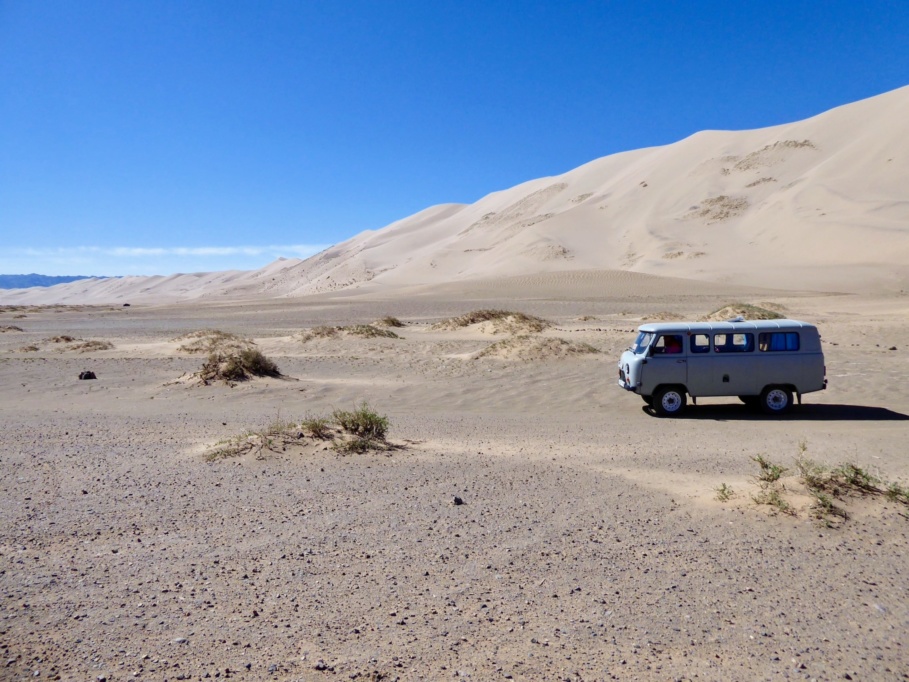
Hiring your own private driver and guide is the best way to experience the Gobi on your terms. You design the itinerary, choose your pace, add extra stops, and reach remote areas off the standard tourist trail. Drivers (usually in sturdy 4x4 Russian vans or Jeeps) handle tough, rugged terrain all day, while guides cook meals, translate with nomads, arrange ger stays or camping, and manage logistics. In very remote sections expect basic conditions: no toilets (use rocks/natural cover), limited or no showers, and authentic nomadic or tented accommodation. This option offers the deepest cultural immersion and freedom.
Pros: Fully customizable, access to hidden spots, personalized pace, better weather adaptability.
Cons: Higher cost than group tours; still basic in remote areas.
Practical: Book through reputable local operators (e.g., Golden Gobi — excellent reviews); costs depend on days/group size; includes fuel, meals, water.
Organized Group Tours – Convenient & Budget-Friendly
Most guesthouses in Ulaanbaatar and larger tour companies run set Gobi tours (typically 7–14 days) following classic routes: Flaming Cliffs, Khongor Dunes, Yolyn Am, Tsagaan Suvraga, etc. These include transport, driver/guide, meals, and accommodation (often tourist ger camps with basic showers/toilets, sometimes camping). Group sizes vary (4–12 people), creating a social atmosphere. Quality differs widely — some operators are professional with experienced staff, others cut corners on vehicles, food, or guides.
Pros: Fixed itinerary, shared costs, easier booking, more comfort at tourist camps.
Cons: Less flexibility, crowded at popular sites, generic experience.
Practical: Research reviews thoroughly (TripAdvisor, recent 2025–2026 feedback); international companies offer higher consistency but higher prices.
Independent Travel – High Risk & Only For Experienced
Some adventurous travellers rent a 4x4 (often Russian UAZ vans) and go solo or in small groups. Rental companies can supply tents, sleeping bags, mats, and basic camping gear. However, this is extremely challenging: no road signs, poor/offline maps, vast isolation, no cell signal, long distances between fuel/water points, and sudden weather changes. You must carry extra fuel, water/food for several days, know GPS navigation, and be prepared for breakdowns or getting lost. Villages are rare and hard to find.
Pros: Complete freedom, off-trail exploration, full independence.
Cons: High risk of stranding, accidents, running out of supplies, or serious danger.
Practical: Only for experienced off-road drivers with satellite comms (Garmin inReach), emergency plans, and local knowledge.
Final Tips – Choosing & Preparing For Your Gobi Trip
Best time: May–September (warm days 20–35°C, cool nights); avoid winter dzud (extreme cold/isolation).
Getting there: Fly Ulaanbaatar → Dalanzadgad (~1 hr) then start tour; most operators pick up from UB guesthouses.
Stay: Ger camps ($30–100/night) — tourist camps have showers/toilets; nomad/family gers more authentic but basic.
Essentials: Layers, high-SPF sunscreen, sturdy boots, headlamp, reusable bottle, scarf for dust/sand, satellite comms (no signal in many areas).
Bottom line: Guided options (private or group) are safest and most practical for the Gobi’s remoteness — they handle navigation, meals, and weather surprises so you can focus on the wonders.